
One of the first things that has made humans unique from other species on this planet is how we found a way to communicate.
We can all communicate with each other. We say hi, have discussions, share ideas, and find ways to explain what we are thinking.
So why can it be hard for engineers to communicate their ideas?
Engineering is a very technical field. We spend our school years working through complex problems, learning theories, and finding solutions to problems our professors ask us to solve. We spend countless hours working through these problems, learning how things work and how to find the right solution. In many ways, this is what makes us engineers.
But during these school years, we aren’t taught how to communicate the complexity of what we study.
When studying engineering, the math can get complicated. I remember sitting at my desk just trying to keep up as the professor would run through the calculations like he had seen them a million times. But what professors sometimes tend to forget is that engineering students, myself included at the time, are seeing this for the first time. It takes time to process, and when the professor goes too fast, it can be challenging to keep up.
But it isn’t just about keeping up. If someone doesn’t find interest in what they are learning, their focus starts to drift. When that happens, the message the professor is trying to communicate can be lost.
The impact you are trying to make on a young student or the idea you are trying to bring to a client can be lost as well.
Taking myself back to college again, there was a course I had to drop. I wasn’t the only one in the class who dropped it. Almost everyone did, except for one person.
There was something I still remember from that class that always comes to mind. The professor shared a drawing of the old Tappan Zee Bridge. In the drawing, there were question marks showing the boring depths around the middle of the bridge. He went on to explain how the engineers had to deal with extremely deep conditions in the Hudson River and came up with an innovative way to support the bridge using buoyant caissons.
This totally caught my interest. I was fascinated by the engineering ingenuity that made this happen. The communication was interesting right from the start because I wanted to know more.
But as the course continued, it didn’t continue like this. The professor started taking the theories to a level that was extremely difficult to understand.
Then came the test. The questions were supposed to take the theory we had been taught and have us apply it to practical questions. The majority of the students, including myself, couldn’t grasp what the questions were asking, and many of us ended up dropping the course.
I feel many of the readers here may have encountered similar situations. A professor can be extremely knowledgeable and very good at what they do, but communicating complicated theories to students who are just beginning to learn can be challenging.
So why do I bring this story up? What does this have to do with communication?
Communication is about knowing who your audience is.
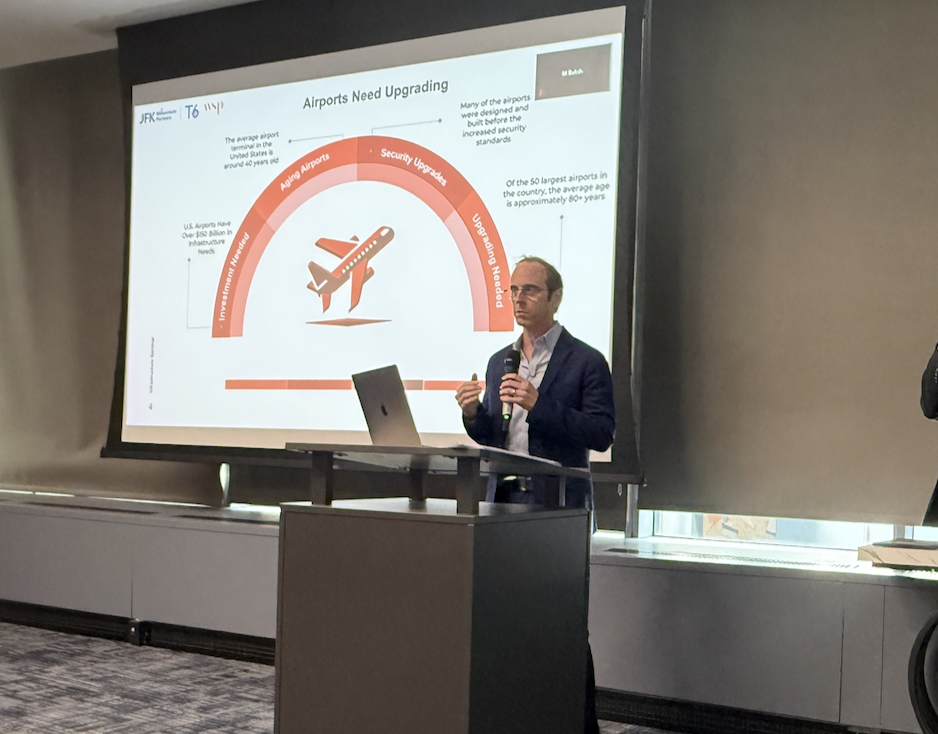
I attend several seminars and love hearing about how engineers approach different problems, develop innovative approaches, and work through complex challenges. But if you presented that same presentation to a group of people who never studied engineering, would they understand it?
What if you presented it to a group of second-grade students? Not only would they have no idea what you were talking about, they would most likely walk back to their desks and start coloring.
You need to understand your audience.
Here are some of the things that I use to find better ways to communicate.
Know your audience.
Speaking to engineers, professionals who are not engineers, students, or politicians all require different approaches.
Engineers may want something more technical, while a politician may want something more to the point. How would this benefit the community? What problem are we solving? Why should people care?
Understanding who you are speaking to makes a big difference.
Ask yourself, would a five-year-old understand how I am presenting this?
This can be challenging for someone who has a bachelor’s degree in engineering and has spent a career working in a very technical field. It takes practice. So what have I done? I make sure to get in front of actual young students and talk with them. I get involved with organizations that teach STEM and look for opportunities to present to students.
The best way to learn how to communicate your ideas is to get in front of people who don’t already understand what you are talking about. If they find it interesting and engaging, then you are probably doing something right. And if you can explain an engineering idea to a five-year-old, you are probably going to have a much easier time explaining it to someone who isn’t an engineer.
The goal isn’t to dumb down the engineering. It is to remove the unnecessary complexity.
Don’t just present. Engage.
But what does this actually mean? How many presentations have you been to where you feel like you are being talked to rather than being talked with? How does it feel when you are actually being brought into the presentation?
One of my favorite things to do when I present is put together scenarios of aircraft maneuvers that we had to lay out and figure out which ones worked best. I ask the audience, which scenario would they choose? I even take it one step further and ask why they would choose that scenario.
Some people bring up reasons I hadn’t even considered. Others may choose an option that doesn’t work. But that’s okay. Not only is this an engaging tool, but I also try to bring failure into the conversation. It is okay to select an idea and it is okay if it isn’t the right one.
Ask questions to the people you are talking to. Have them engage in the conversation.
Don’t just talk technical. Find something they can relate to. Bring them into the conversation as if they were solving the technical problem with you.
Those are the types of engagement ideas that can make a presentation memorable.
Present at every opportunity you can.
This may not be the easiest thing to do. Early in my career, I didn’t get many opportunities to present. As a young engineer, it can be hard to find those opportunities. It is also intimidating because you may not feel experienced enough.
But these are things you need to put aside. It is okay to make mistakes.
Ask to present the things you are working on. Get involved in engineering organizations. Volunteer. Get yourself in front of people and get comfortable speaking to others.
I now have 20 years of experience under my belt, and I am still working on communicating. I don’t get in front of people as much as I would like to, and I know there is still plenty of room for me to improve. But I still present and do it as much as I can because the only way to get better is to practice.
Use AI as a communication coach.
This is one that is usually overlooked, or maybe you just don’t want to use AI. But as you continue to use AI over time, it can become a useful tool for providing feedback and different ways to communicate an idea.
The key is giving it the right prompts.
Here are a few prompts and approaches that I use:
Start with the idea, not the words.
Before asking AI to rewrite something, I use it to help identify what I am actually trying to say. Engineers often have a lot of information, but good communication starts with knowing the one idea you want your audience to walk away with.
Ask AI to simplify, not dumb it down.
One of the prompts I come back to is essentially, “Would a five-year-old understand this?” That forces me to look at my explanation from the audience’s perspective rather than from my own technical knowledge. The goal isn’t to remove the engineering. It is to remove the unnecessary complexity.
Change the perspective.
I’ll ask AI, “How would someone outside of engineering understand this?” or “What could be confusing here?” When you know a subject well, you naturally fill in gaps that your audience may not have. AI can act as a second set of eyes and expose those gaps.
Look for the story.
Instead of starting with the technical explanation, I’ll ask, “How can I introduce this through a story or something people can relate to?” A technical concept becomes much easier to understand when people first have a reason to care about it.
Cut the clutter.
I frequently ask AI to make something shorter or remove repetition. Engineers are trained to be thorough, but thoroughness and clarity aren’t always the same thing. Sometimes the best improvement isn’t adding another explanation. It is deleting one.
Use AI for options, not answers.
I can ask AI for different ways to explain an idea, possible analogies, or better openings. But I still have to decide what sounds authentic and what actually communicates my point.
AI can help me find the words, but I need to know what I want to say.
Communication is important for engineers to get their point across. I am not saying it is easy. It takes practice.
But as you continue to develop this skill, you eventually become more comfortable and a much stronger communicator. One day, maybe you will be in front of a mayor pitching an amazing idea that could shape the city. Or maybe you will be in front of a group of students trying to explain why engineering matters.
The technical knowledge is important. It is what allows us to solve the problem in the first place.
But if we can’t communicate the problem, the solution, and why it matters to the people we are trying to serve, then that knowledge can only take us so far.
That is something I am still working on after 20 years in engineering.
And I think I always will be.
Leave a Reply