
Engineering tends to have a reputation for being very heavy in math and science. Many people who think about engineering or are considering pursuing a career in engineering have a tendency to believe there is a lot of technical learning involved.
But engineering is more than just solving complex problems and figuring out the shear force in a 25 foot long I-beam.
Finding solutions to complex problems or discovering a method to reduce the moment in a structure takes thinking. It isn’t always the same thought process that was worked out on a previous job. Every project is different, and it takes innovative solutions to work through the challenges we face.
Engineers need to come up with solutions to the challenges we face in today’s world, from climate change to traffic congestion to developing more fuel efficient aircraft. Engineers need to think outside the box.
Thinking outside the box takes creativity. And it is okay to think beyond the realm of reality.
In the book Big Trust by Dr. Shade Zahrai, she had an interesting take on creativity that made me think beyond just being outside the box. One of the main points she made was that creativity can become suppressed when we become overly concerned with being competent, getting things right, or avoiding failure.
Engineers may have all of these traits.
We take on a heavy responsibility to society and to the public who will be using what we design. So I am not saying we should avoid these things. It is critically important to be competent, make sure things are right, and avoid failure when it comes to the things we design.
But there is a difference between the final solution and the process of getting there.
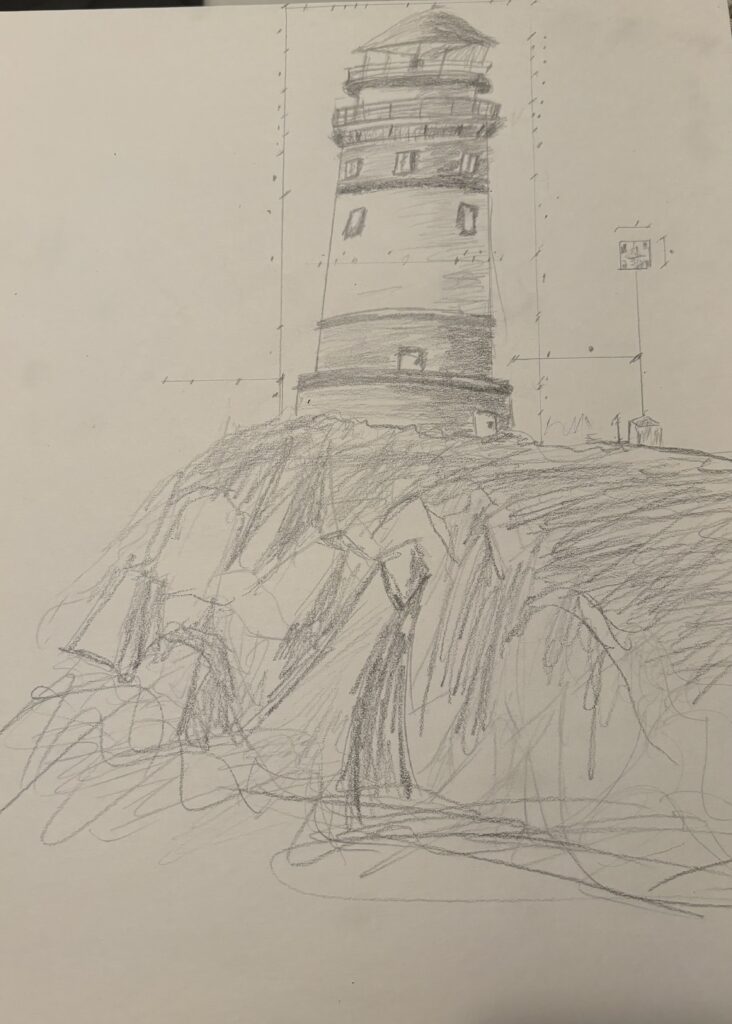
Image: Original artwork I created
As engineers, we can step outside our comfort zone during the process to open up our creativity. This doesn’t mean ignoring codes, requirements, or safety. It means not allowing those constraints to limit our thinking before we have even explored what might be possible.
Building in the built environment can make meeting standards extremely difficult. Sometimes developing a creative idea is exactly what is needed to find an innovative solution.
Zahrai described play as a way to lower the stakes. When you’re playing, you are more willing to experiment, make mistakes, and see what happens rather than worrying about whether you’re doing it right.
This is where innovation can develop.
I experienced this on a major redevelopment project where we were working through several iterations of traffic patterns to maintain an acceptable level of service. We were trying to stick to the books and work through every possible scenario, but what we were coming up with just wasn’t working.
One of the roads we needed to build had a major conflict with both existing roads and new roads all around it. We couldn’t build out a section of the bridge the way we originally planned.
But as we continued developing different scenarios, one crazy idea came from a simple question:
“Why not just launch a temporary bridge over a few days?”
It sounded crazy at first.
But it ended up being one of the best ways to maintain traffic while allowing the project to move forward.
We sketched up a few different ideas, worked through the details, and after several months, we were able to get it to work. It took time to convince others that the idea was possible, but it eventually became a solution.
That idea didn’t come from a book.
It came from allowing ourselves to think differently about the problem.
These types of ideas don’t always come from technical manuals or engineering textbooks. They can come from keeping your creative spark alive.
Something I continue to do is draw, practice photography, and work on this website and blog. These are ways for me to continue developing my creativity and keeping myself challenged.
I think this is especially important in a world with advancing technology like AI. We have to be careful not to allow technology to do all of the thinking for us.
There was interesting research discussed in Big Trust involving more than 500 Nobel Prize-winning scientists. The research found that Nobel Prize winners were more likely than average scientists to engage in creative hobbies such as music, writing, or painting. The suggested explanation was that these activities may help people make connections, think differently, and approach problems from different perspectives.
Which got me thinking.
Maybe creativity isn’t something we should only practice when we sit down to solve an engineering problem. Maybe we should practice it all the time.
So as you chat with an AI chatbot, remember to give yourself an opportunity to think through your ideas first. Before asking AI for the answer, see what you can come up with yourself.
Continue being creative with your hobbies. Draw. Take photographs. Write. Play music. Build something. Try something you’ve never done before.

Image: Drawing and sketching are hobbies I enjoy. This is an original drawing I created of the Times Square Ball.
You may be surprised where those creative ideas show up later.
They may show up when you’re trying to solve a traffic problem, design an airport, figure out how to build around existing infrastructure, or develop a solution that nobody thought would work.
Engineering requires us to get things right.
But sometimes, before we can find the right answer, we need to give ourselves permission to explore the wrong ones.
That is where creativity can lead to innovation.
Leave a Reply