
Civil engineering was not what I thought it was when I decided to study it in college.
I actually started college planning to study Mechanical Engineering.
During my first semester, we were introduced to several different engineering programs. Every couple of weeks, we would work on a project that gave us a glimpse into what each discipline was about.
For the mechanical engineering project, we built a small vehicle that moved using its own mechanical propulsion.
It was fun. But as I started learning more about the courses required for mechanical engineering, I realized it wasn’t for me.
Then I discovered civil engineering.
Something about it caught my attention.
I had always enjoyed building things and being involved in construction. I grew up building LEGO towns, playing games like SimCity, and helping my dad build things around the house. Civil engineering seemed to fit the way I naturally thought and the things I enjoyed.
And, honestly, the courses didn’t look quite as intimidating as mechanical engineering.
Looking back, there were several things I wish I had known before becoming an engineer. Not just a civil engineer.
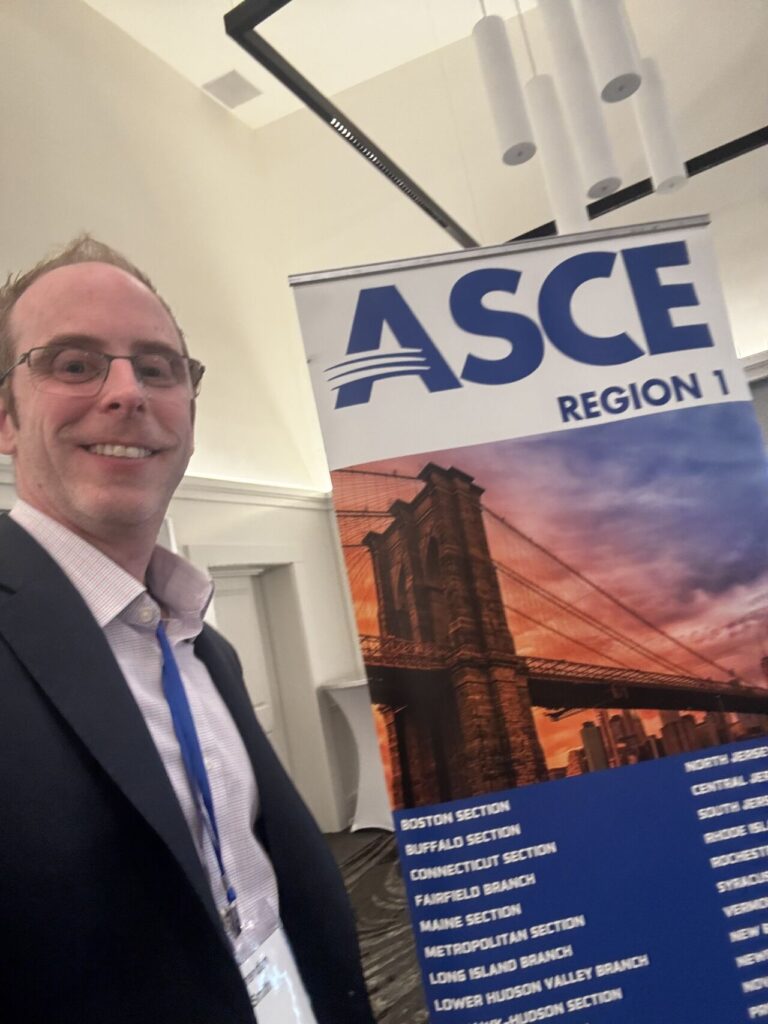
I wish I had understood these things as a college student because they are just as important to building a career as the technical knowledge we spend so much time learning.
Being good at math isn’t everything.
Differential equations. Physics. Statics. Compression. Tension.
There is a lot of math behind engineering.
And it is important.
Engineers need to understand the theories behind why a beam deflects under load, why a structure needs to be designed a certain way, or why a beam may be fabricated with a slight camber to counteract expected deflection.
Understanding the technical side of engineering matters.
But it isn’t enough.
What is engineering if the person you’re engineering for doesn’t understand why you’re doing it?
What is engineering if you specify parameters that add millions of dollars to a project, but the person paying for it doesn’t understand why those additional costs are necessary?
What is engineering if you specify equipment that the person who will ultimately use it doesn’t understand?
As an engineer, you may know why something is the best solution.
But do the other people involved understand why?
Engineering isn’t just about the math that proves something is the best solution. It is about communicating why it is the best solution.
That means writing.
It means presenting.
It means explaining technical ideas to people who may not have an engineering background.
It means listening to what someone else needs and finding a way to explain the solution in a way that makes sense to them.
These are skills I wish I had focused on just as much as the technical side of engineering.
Reading can provide valuable lessons.
I read a lot now.
But it wasn’t always that way.
I don’t think I read a single book in college.
I read textbooks. I read news articles. I studied what I needed to study.
But I didn’t read books simply because I wanted to learn something new.
That changed as I got older.
Now, at 40, reading has become one of my favorite things to do. If I have a good book in my hand, I may not even turn on the television at night.
But it isn’t just about reading a good story.
Books are full of knowledge.
An author can spend years researching a subject and then condense that knowledge into something you can learn from in a matter of hours.
I’ve learned a tremendous amount from reading about history, engineering, infrastructure, and the people who came before us.
I’ve read about engineers who struggled through problems that took years to solve. I’ve learned about civilizations that developed technologies that influenced the world long after they were gone.
You can learn from their successes. You can learn from their failures.
And you can take those lessons and apply them to your own work. I wish I had understood that earlier.
Learning doesn’t stop when you graduate.
In many ways, that’s when it really begins.
You won’t always know what you want to do.
Have you ever been asked where you see yourself in five years? Or ten?
It can be an uncomfortable question.
But it’s okay if you don’t know the answer. Most people don’t have their entire careers mapped out. It took me about seven years after graduating college to understand what I really wanted.
I didn’t know what I wanted.
I didn’t even know if engineering was the right fit for me.
I explored other possibilities. I looked at other professions. I tried to understand what it was that I was actually searching for. Eventually, I realized that the answer wasn’t necessarily a specific job.
It was something deeper.
I wanted to make an impact on people’s lives through the work I was doing. Once I understood that, it became easier to understand what I wanted from my career.
You don’t necessarily need to know exactly where you’re going.
Sometimes, you just need to understand what matters to you.
Your first job doesn’t define your career.
Landing your first engineering job can be exciting. You finally have your degree. You have a job. You’re officially an engineer. It can also feel like you’ve just committed yourself to one path.
But the key is, you haven’t.
Keeping yourself open to new possibilities allows your career to evolve. Even though I’m still a civil engineer, my focus has changed significantly since I graduated.
My first job involved site development projects and inspections. Later, I moved into more roadway design. Eventually, I stumbled into aviation.
Today, I work in the aviation industry, where I am involved in terminal redevelopment projects and the coordination that goes into making sure aircraft can safely get in and out of gates.
I’ve developed a real appreciation for the aviation world. There is an incredible amount of planning, coordination, engineering, and teamwork that goes into making an airport function.
And I’m proud to have a small part in making that happen.
My career didn’t follow a straight line.
And I’m glad it didn’t.
The projects matter, but so do the people.
I’ve worked on some great projects.
I’ve worked on small site development projects where the goal was simply to improve circulation throughout a site.
I’ve also worked on multi-billion-dollar projects involving thousands of people and countless moving parts.
The scale of the project is exciting. But over time, I’ve realized that the people are what make the projects. It’s the people you work with.
The people who teach you something.
The people who challenge your thinking.
The people you become friends with.
And sometimes, it’s the people who use what you helped create.
One of the things I enjoy most is when a friend or family member sends me a message after traveling through an airport and tells me how great it looks.
They may have no idea how many people were involved in making that happen. They may not know about the meetings, drawings, reviews, coordination, construction, problems, and decisions that went into it. They just see an airport that works.
And that’s okay.
Because that’s part of what we do.
The projects are important.
But the people you meet along the way may become some of the most valuable parts of your career.
Make it fun.
Build relationships.
Enjoy the work you’re doing.
You eventually realize engineering is bigger than engineering.
Eventually, you start to realize that there is more to engineering than connecting drainage structures, designing roadways, spanning water, or trying to reach the clouds.
Engineering is part of what allows society to move forward.
We build the infrastructure that allows people to travel, work, live, connect, and grow.
And when you look back through history, you can see how much engineering has shaped civilization.
Some of the knowledge and techniques developed by ancient civilizations were eventually lost or forgotten. Technologies that once seemed advanced disappeared as civilizations changed and empires rose and fell.
The history of concrete is a great example.
Ancient civilizations, particularly the Romans, developed remarkable concrete technologies. Some of their structures have survived for centuries.
It makes me wonder:
What could we learn from the things they knew that we have forgotten?
And more importantly:
What are we building today that future generations will learn from?
That’s the responsibility I think we have as engineers. We shouldn’t simply build something because we can. We should try to understand what came before us, learn from it, improve upon it, and leave something better for the people who come after us.
Engineering can make a difference.
I’ve learned that it isn’t just about the calculations, the drawings, the specifications, or the projects.
It’s about the people those projects serve.
It’s about continuing to learn.
It’s about communicating our ideas.
It’s about working with others.
And ultimately, it’s about using what we know to make society better.
We as engineers can make a difference.
And it’s up to us to make that difference.

Leave a Reply